
Why Serum Makes Skin Look Greasy: Solutions That Work
Table of Contents
- Why Serum Makes Skin Look Greasy
- Common Mistakes When Applying Serum
- How to Layer Skincare for Oily Skin
- How Long to Wait Between Skincare Steps
- Best Lightweight Serums for Oily Skin
- How Your Skin Barrier Affects Oil Production
- Signs Your Moisturizer Is Too Heavy
- Conclusion
Why Serum Makes Skin Look Greasy
The most common complaint about serums is that they make skin look shiny and greasy by midday. Understanding why requires examining three interconnected factors: how the product's texture interacts with your skin, what ingredients are in the formula, and whether your application technique is working against you.
The irony is that serums are designed to deliver hydration without heaviness. Yet many people abandon them after a week because their skin looks worse. The good news: this problem is almost always fixable. Once you address the real culprit, serums become the game-changer they're supposed to be.
Viscosity and Product Texture
The weight and consistency of a serum directly determines how it sits on your skin. A serum with high viscosity feels heavier, absorbs more slowly, and leaves a visible sheen longer. A low-viscosity serum absorbs quickly and dries to a matte finish.
For oily skin types, a lighter serum with lower viscosity often penetrates more effectively because it doesn't sit on the surface creating that sticky, greasy appearance. Water-based serums typically have lower viscosity than oil-based ones. If you're currently using an oil-based serum and experiencing greasiness, switching to a water-based formula could solve the problem entirely.
Occlusive Ingredients Trapping Oil
Occlusive agents like silicones, oils, and waxes seal moisture into the skin by forming a protective barrier. However, they can trap existing sebum on the skin's surface if you're already producing excess oil. The occlusive ingredient isn't creating new oil; it's trapping the oil your skin naturally produces and preventing it from being absorbed or dispersed.
The solution isn't to avoid occlusives entirely, your skin barrier needs them. Instead, choose serums with lighter occlusives or use them strategically. Humectants like hyaluronic acid draw moisture into the skin without creating that occlusive seal. If you're prone to greasiness, prioritize humectant-based serums and reserve heavier occlusives for nighttime or the driest areas only.
Over-Cleansing and the Rebound Effect
One of the most overlooked reasons why serum makes skin look greasy is that your skin barrier has been compromised by over-cleansing. When you strip your skin too aggressively with harsh cleansers or over-wash throughout the day, your skin responds by producing excess sebum to compensate. This rebound effect means your skin is already oily before the serum even touches it.
When you then apply a serum, that excess oil has nowhere to go and sits on the surface. The real problem isn't the serum; it's that your skin is in overdrive trying to repair a damaged barrier. Using a gentler cleanser and applying a serum designed to repair the barrier actually reduces overall greasiness over time.
Common Mistakes When Applying Serum
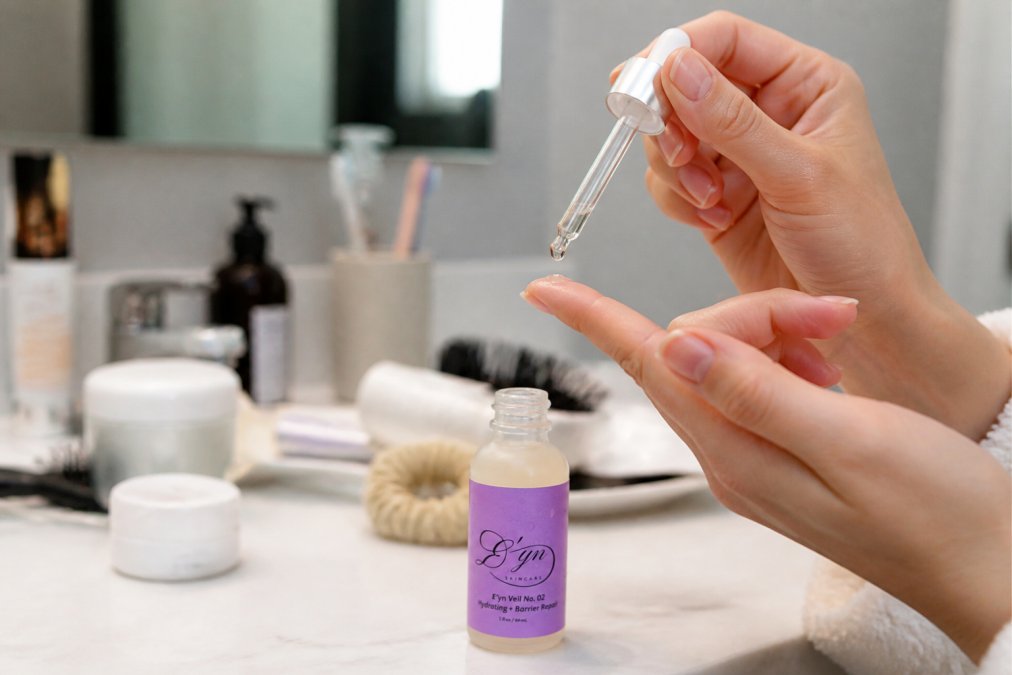
How you apply a serum matters as much as which serum you choose. Most people make one of three consistent mistakes that guarantee greasy-looking skin within hours.
Using Too Much Product
The biggest mistake is using too much serum. A single pump or a few drops is enough to cover your entire face. Start with a pea-sized drop for your entire face, spread it across your forehead, cheeks, nose, and chin, then gently pat it in. If your skin still feels dry after 60 seconds, add a second small drop.
Oversaturation prevents proper absorption. When too much product sits on the surface, it doesn't penetrate into deeper layers where it can actually repair the barrier or deliver hydration. Less product, applied correctly, delivers better results and a cleaner appearance.
Applying to Damp Skin Without Waiting
Damp skin does help with absorption, but if your skin is too wet, the serum dilutes and spreads unevenly. After cleansing, wait 30-60 seconds for your skin to reach a barely-damp state, not soaking wet. At this point, your skin retains enough moisture to enhance absorption without diluting the serum.
If you apply serum to soaking-wet skin, it will bead up on the surface rather than absorb, creating visible oiliness and wasted product.
Layering Heavy Products on Top
Even if your serum is lightweight and absorbs well, the products you layer on top can create greasiness. A heavy moisturizer applied immediately after serum traps the serum on the skin's surface and prevents proper absorption.
Wait 2-3 minutes after applying serum before applying moisturizer. This gives the serum time to absorb fully. For oily skin, you may not need a heavy moisturizer at all, a lightweight, non-comedogenic option or hydrating toner might be sufficient.
How to Layer Skincare for Oily Skin
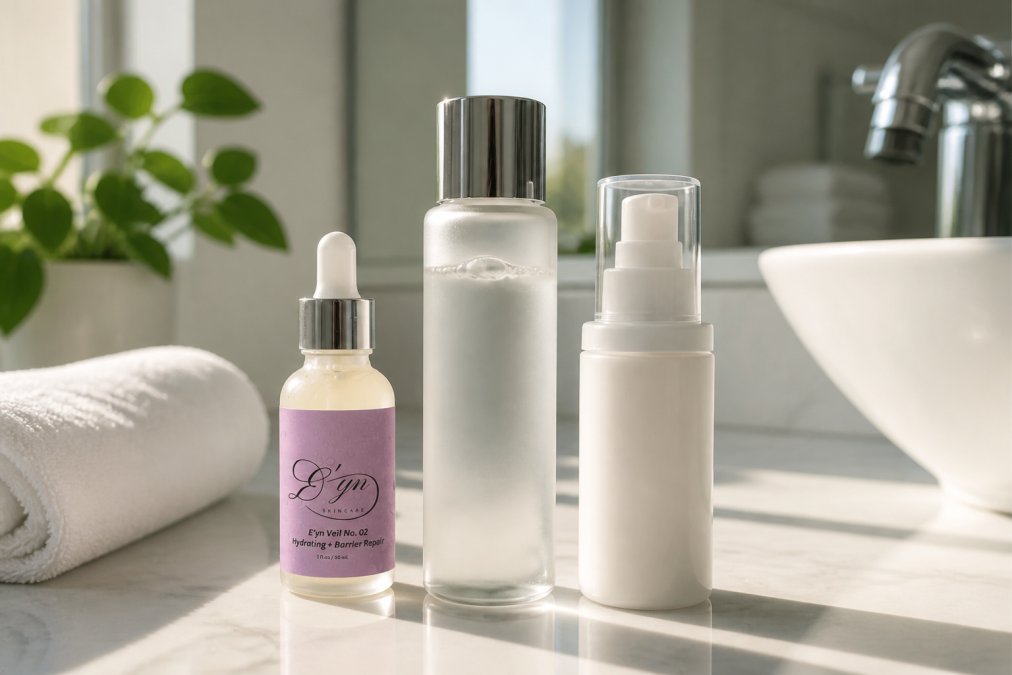
The order in which you apply products fundamentally changes how they perform and how your skin looks.
The Order That Matters
Start with the lightest textures and work toward heavier ones. This ensures each product absorbs before the next one is applied, preventing buildup and that sticky, greasy feeling.
The correct order for oily skin is: cleanser → toner or essence → serum → lightweight moisturizer → sunscreen (morning) or occlusive treatment (night). Each step should be fully absorbed before moving to the next. Wait at least 30 seconds between products, with 60 seconds minimum between serum and moisturizer.
Choosing Non-Comedogenic Products
Non-comedogenic products are formulated to not clog pores or contribute to congestion. For oily skin, this is essential. Water-based serums are almost always non-comedogenic because they lack the heavy lipid molecules that can trap bacteria and dead skin cells in pores.
The E'yn Veil No. 2 Hydrating + Barrier Repair Serum is specifically formulated to be non-comedogenic while delivering deep hydration.
How Long to Wait Between Skincare Steps
Patience is the most underrated part of an effective skincare routine. Rushing through application or layering products before the previous one has absorbed contributes to that greasy appearance.
The Wait Time Technique for Absorption
Allow 60-90 seconds between applying serum and applying the next product. During this wait, you'll notice the serum's texture changes. If it started with a slightly dewy appearance, it will dry down to a matte or satin finish as it absorbs.
This technique is especially important for serums containing hyaluronic acid or other humectants. These ingredients need time to draw moisture from deeper skin layers and distribute it evenly. This small time investment prevents the greasy appearance and maximizes the serum's actual benefits.
Best Lightweight Serums for Oily Skin
When shopping for a serum that won't make your skin look greasy, focus on two qualities: water-based formulation and non-comedogenic ingredients.
What to Look For in a Serum Formula
The best serums for oily skin contain humectants, ingredients that draw moisture into the skin without creating an occlusive barrier. Hyaluronic acid is the gold standard, it can hold up to 1000 times its weight in water, pulling hydration into the skin without any greasy residue.
Glycerin is another excellent humectant that works similarly. Look for serums that also include lightweight actives like niacinamide, which regulates sebum production and strengthens the skin barrier, or peptides, which support skin firmness without adding weight. Avoid serums heavy in oils or silicones if you're prone to greasiness.
The texture should feel lightweight when you first apply it, almost watery. If a serum feels thick or sticky out of the bottle, it will likely feel that way on your skin too.
Water-Based vs. Oil-Based Serums
Water-based serums are formulated with water as the primary carrier and absorb quickly, feeling lightweight and drying to a clean finish. For oily skin, water-based is almost always the better choice.
Oil-based serums use oils like jojoba, rosehip, or squalane as the primary carrier. These deliver rich hydration and are excellent for dry or mature skin types. However, for oily skin, they often sit on the surface longer and can contribute to that greasy appearance.
The E'yn Veil No. 2 is a water-based serum designed specifically for hydration without heaviness. It delivers the barrier-repair benefits of a professional serum while maintaining the lightweight texture that oily skin needs.
How Your Skin Barrier Affects Oil Production
Your skin barrier is the outermost layer of your epidermis, composed of lipids, proteins, and dead skin cells. When this barrier is healthy, it regulates moisture loss and maintains proper oil production. When it's compromised, your skin goes into overdrive trying to compensate.
A damaged barrier can't retain moisture effectively, so water evaporates from the skin's surface. Your skin responds by producing excess sebum to try to seal in moisture. This excess oil is what makes serums look greasy: you're applying a hydrating product to skin that's already producing excess oil as a compensation mechanism.
The solution is to repair the barrier first. Serums containing ceramides, cholesterol, or fatty acids help rebuild the lipid barrier. Once your barrier is healthy, your skin stops overproducing oil, and serums no longer create that greasy appearance.
Signs Your Moisturizer Is Too Heavy
If you're using a serum correctly but still experiencing greasiness, your moisturizer might be the culprit. Signs include: skin that looks greasy by midday despite using a lightweight serum, a sticky or tacky feeling that doesn't go away, visible pore congestion developing over time, or skin that feels heavy and suffocated.
The fix is to switch to a lighter moisturizer or use less of the one you have. For oily skin, a gel-based moisturizer or hydrating toner might be sufficient instead of a traditional cream. You might also find that your serum alone is enough hydration.
The greasy appearance that comes from serums is almost never the serum's fault. It's almost always a combination of product choice, application technique, and barrier function. Once you understand these three factors, you can use serums confidently without worrying about looking shiny by midday.
Start by assessing your current routine: Are you using a water-based, non-comedogenic serum? Are you applying the correct amount and waiting between steps? Is your skin barrier healthy, or is it overproducing oil as a compensation mechanism? Address each factor systematically, and you'll find that serums become the transformative products they're designed to be.
The E'yn Veil No. 2 Hydrating + Barrier Repair Serum is formulated specifically to address these concerns. Its water-based formula absorbs quickly without greasiness, its non-comedogenic ingredients support barrier health, and its hyaluronic acid and botanical actives deliver lasting hydration. For oily skin types that have struggled with serums in the past, this is the product designed to prove that hydration and a clean appearance aren't mutually exclusive. Get started with E'yn Skincare and experience the difference a properly formulated serum can make for your skin's health and appearance.
| Application Mistake | What Happens | How to Fix |
|---|---|---|
| Using too much product | Serum sits on surface, creates greasy appearance | Use pea-sized amount, add more only if needed |
| Applying to soaking-wet skin | Serum dilutes, spreads unevenly, beads up | Wait 30-60 seconds after cleansing for barely-damp state |
| Layering heavy products immediately | Serum trapped on surface, can't absorb | Wait 2-3 minutes before applying moisturizer |
| Skipping wait time between steps | Products compete for absorption, create buildup | Wait 60-90 seconds between serum and next product |
| Using wrong serum type for skin | Oil-based serums trap sebum on oily skin | Switch to water-based, non-comedogenic formula |
Frequently Asked Questions
Why does serum make my face oily?
Serum can create a greasy appearance due to viscosity, occlusive ingredients, or application mistakes. Heavy serums with emollients trap oil on the skin's surface, while applying too much product or layering it over damp skin prevents proper absorption. Over-cleansing can also trigger your skin to overproduce sebum as a defense mechanism, making even lightweight serums look greasy. The key is choosing a water-based serum with humectants rather than heavy occlusives, and applying the right amount to dry skin.
How long should I wait between skincare steps to avoid greasy buildup?
Wait 30-60 seconds between each product application, or until the previous layer feels completely dry to the touch. This wait time technique allows each product to absorb fully into the skin rather than sitting on the surface, which creates sticky residue and excessive shine. For serums specifically, apply to clean, completely dry skin, wait 1-2 minutes for absorption, then apply your next product. Rushing this process causes product buildup and the greasy appearance you're trying to avoid.
What makes a serum lightweight enough for oily skin?
Look for water-based serums with humectants like hyaluronic acid and glycerin rather than heavy emollients or occlusive agents. Check the ingredient list: serums listing water first, followed by active ingredients and minimal silicones or oils, absorb quickly without leaving sticky residue. Non-comedogenic formulas won't clog pores or trigger additional sebum production. The E'yn Veil No. 2 is designed specifically for this profile, delivering hydration and barrier repair without heaviness, making it suitable for oily and sensitive skin types alike.
Can a serum actually repair my skin barrier, or is it just hype?
A serum can repair your skin barrier when it contains the right active ingredients and you use it consistently. Serums with hyaluronic acid, ceramides, and niacinamide strengthen the lipid barrier and reduce transepidermal water loss. A compromised barrier often triggers excess sebum production as your skin tries to compensate, so repairing it can actually reduce oiliness over time. Results typically appear within 2-4 weeks of daily use, with visible improvements in texture, redness reduction, and a more balanced complexion.
This article was written using GrandRanker