
Lightweight Serums for Barrier Support: A 2026 Guide
Table of Contents
- What Is a Skin Barrier and Why Lightweight Serums Matter
- How to Fix a Damaged Skin Barrier
- Key Ingredients to Look for in Barrier Support Serums
- Best Barrier Repair Serum for Oily Skin
- How to Incorporate a Lightweight Serum Into Your Routine
- What Makes a Serum Lightweight Yet Effective
- Conclusion
Last Updated: August 13, 2026
What Is a Skin Barrier and Why Lightweight Serums Matter
Your skin barrier is a protective layer composed of lipids, ceramides, and proteins that sits at the outermost level of your skin. When functioning properly, it locks in moisture and keeps irritants out. A compromised skin barrier, however, becomes permeable, water escapes (a process called transepidermal water loss), inflammation increases, and your skin becomes reactive to products it previously tolerated.
This is where a lightweight serum for barrier support becomes essential. Unlike heavy creams that sit on the surface, a well-formulated serum penetrates deeply to deliver hydrating and barrier-repairing ingredients exactly where they're needed. The key word here is lightweight. A serum that's too occlusive defeats the purpose; it clogs pores and creates the greasy feeling that keeps many people from committing to barrier repair.
At E'yn Skincare, we've designed our formulations around this exact principle. A buy lightweight serum for barrier support should work beneath the surface, not just coat it. This means using the right molecular weight of hyaluronic acid, incorporating ceramides that match your skin's natural lipid profile, and choosing soothing actives that calm inflammation without irritation. The result is visible plumping and smoother texture without any heaviness.
The science is straightforward: your skin barrier regenerates roughly every two to four weeks. If you're using a properly formulated lightweight serum during that window, you're actively supporting that regeneration process. You'll notice reduced redness, tighter pores, and skin that feels genuinely hydrated rather than just moisturized. This isn't maintenance, it's active repair.
How to Fix a Damaged Skin Barrier
A damaged skin barrier typically announces itself through tightness, stinging sensations, increased sensitivity to products you've used before, visible redness, and a dull, dehydrated appearance. If your skin feels uncomfortable even when you're not actively treating it, your barrier needs attention.
The first step is simplification. Strip your routine back to essentials: a gentle cleanser, a hydrating lightweight serum for barrier support, and a moisturizer. Skip actives like retinol, vitamin C, and exfoliants entirely until your barrier shows signs of recovery. These ingredients are valuable, but they're inflammatory by design, your barrier can't handle that stress right now.
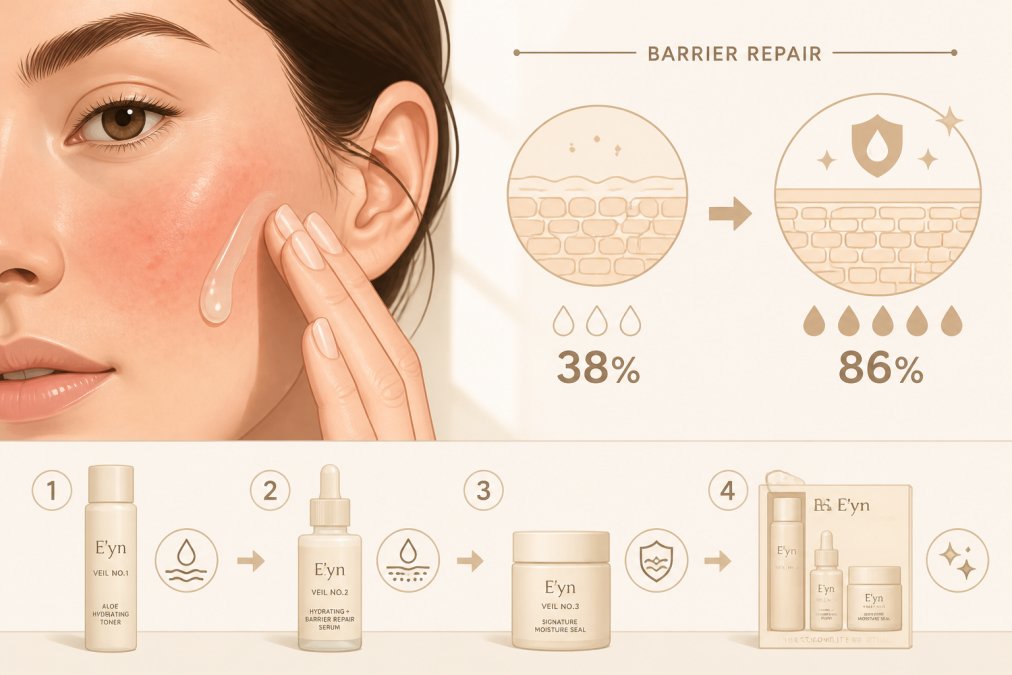
Choose a serum that prioritizes soothing and hydration. Look for ingredients like niacinamide, which reduces inflammation and strengthens the barrier's lipid profile. Panthenol is another powerhouse, it's both hydrating and calming, making it ideal when your skin is reactive. Ectoin is increasingly popular in clinical formulations because it protects cells from stress and supports moisture retention without any irritation risk.
Consistency matters more than perfection here. Apply your serum to clean, slightly damp skin, the moisture helps it penetrate more effectively. Follow immediately with your moisturizer to seal everything in. Do this twice daily for at least four weeks. Most people see meaningful improvement in redness and sensitivity within two to three weeks, but full barrier recovery takes longer.
One common mistake is switching products too frequently while your barrier is compromised. Your skin needs stability, not experimentation. Stick with one serum, one moisturizer, and one cleanser for the full recovery period. Once your barrier feels normal again, no tightness, no stinging, no unexplained redness, you can gradually reintroduce other products.
Key Ingredients to Look for in Barrier Support Serums
Not all serums are created equal when it comes to barrier repair. The most effective formulations combine hydrating, lipid-replenishing, and soothing ingredients in a lightweight base that actually absorbs.
Hyaluronic acid is the foundation of any hydrating serum, but molecular weight matters enormously. High-molecular-weight hyaluronic acid (over 1 million Daltons) sits on the skin surface and provides immediate hydration. Low-molecular-weight versions penetrate deeper and support moisture retention at the cellular level. The best barrier support serums use a blend of both. This layered approach delivers immediate plumping while supporting long-term hydration.
Ceramides are non-negotiable for barrier repair. Your skin's natural barrier contains ceramides as a core structural component. When you apply them topically, you're literally replacing what's been lost. Ceramides 1, 3, and 6-II are the most clinically proven for barrier function. Look for these specifically listed in the ingredient deck, generic "ceramide complex" is less reliable.
Cholesterol and fatty acids work synergistically with ceramides. Together, they form the lipid matrix that holds your barrier together. If a serum includes ceramides but skips these supporting lipids, it's incomplete. The best formulations include all three: ceramides, cholesterol, and fatty acids in a ratio that mimics your skin's natural composition.
Niacinamide (vitamin B3) reduces inflammation, strengthens the barrier's lipid profile, and minimizes pore appearance. It's gentle enough for even severely compromised skin and works well with every other barrier-supporting ingredient. A concentration of 4-5% is therapeutic; anything higher can feel slightly drying for some skin types.
Panthenol and ectoin are underrated soothing agents. Panthenol is both hydrating and calming, it reduces redness and supports barrier function without any irritation. Ectoin is newer to mainstream skincare but increasingly backed by clinical research for its ability to protect skin cells and support moisture retention during barrier stress.
Avoid fragrance, essential oils, and high concentrations of alcohol in barrier support serums. These are inflammatory and will worsen your situation. Similarly, skip actives like glycolic acid, salicylic acid, and retinol until your barrier has recovered. These work against what you're trying to achieve.
Best Barrier Repair Serum for Oily Skin
The biggest concern for oily skin is that a hydrating serum will feel greasy or cause congestion. This fear is understandable but often based on past experiences with heavy, occlusive formulas. A truly lightweight serum for barrier support can work beautifully for oily skin, you just need to know what to look for.
The key is texture and molecular structure. A serum formulated as a lightweight emulsion (not an oil) will absorb quickly without leaving residue. Look for serums with a gel-like or fluid consistency rather than viscous or creamy ones. The ingredient list should feature water or hydrosols as the primary base, with hydrating actives that don't add weight.
Hyaluronic acid is actually ideal for oily skin, it hydrates without adding oil. The same applies to niacinamide and panthenol. These ingredients support barrier function without contributing to shine. What you want to avoid are heavy plant oils, silicones in high concentrations, and occlusive butters. A serum that's 80% water and 20% actives will feel completely different from one that's oil-based.
E'yn Veil No. 2 is specifically formulated for this balance. It delivers ceramides, hyaluronic acid, and soothing ingredients in a lightweight emulsion that absorbs in seconds. Oily skin types report that it hydrates without any greasy residue, and it layers beautifully under other products without causing congestion. The serum actually helps regulate sebum production over time because skin that's properly hydrated produces less compensatory oil.
Application technique matters too. For oily skin, use less product, a dime-sized amount is usually enough. Apply to damp skin so it distributes more evenly. Follow with a lightweight, non-comedogenic moisturizer. This combination delivers barrier support without the heaviness that oily skin types understandably fear.
How to Incorporate a Lightweight Serum Into Your Routine
A lightweight serum for barrier support works best when used strategically within your overall routine. Timing and layering are everything.
Apply serum to freshly cleansed skin while it's still slightly damp. This is crucial, the residual moisture helps the serum penetrate and spread more evenly. If your skin is completely dry, the serum will absorb faster but less completely. Pat your face with a clean towel, leaving it just barely damp, then apply your serum.
Use your fingertips or a clean spatula to distribute the serum gently across your face and neck. Avoid tugging or aggressive rubbing, your barrier is already compromised. A light pressing motion allows the serum to absorb without disrupting the skin. Wait 30-60 seconds for the serum to set before applying your next product.
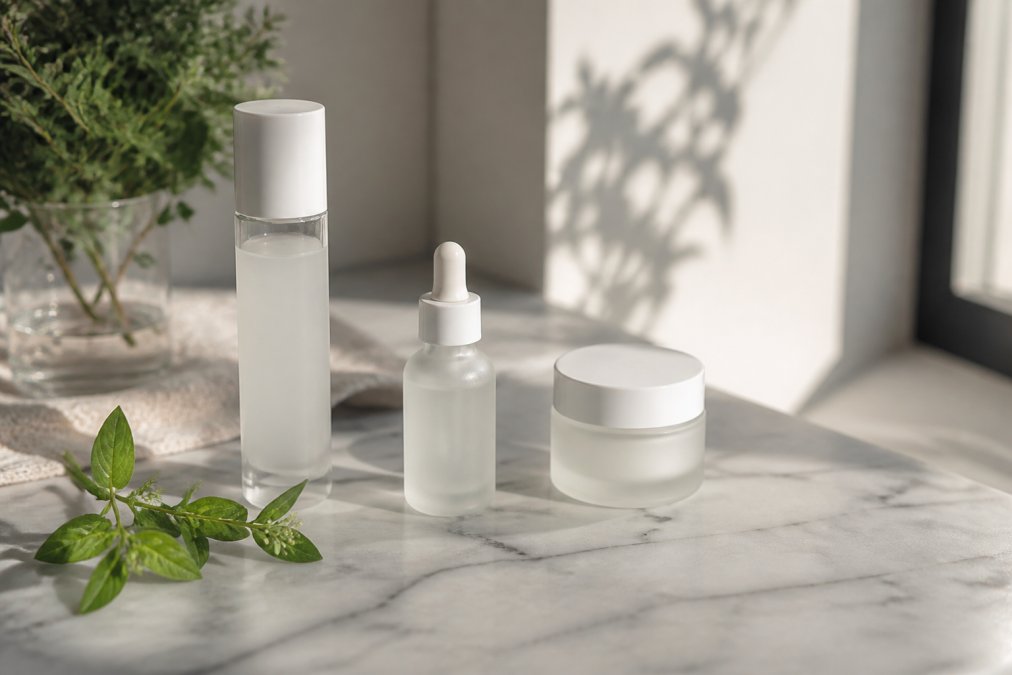
Follow immediately with your moisturizer. This is non-negotiable. A serum alone, even a hydrating one, isn't occlusive enough to lock in moisture for an extended period. Your moisturizer acts as a seal. The combination of serum plus moisturizer is what creates lasting hydration and barrier repair.
Morning routine:
- Gentle cleanser
- Lightweight serum for barrier support
- Lightweight, non-comedogenic moisturizer
- Broad-spectrum sunscreen (SPF 30+)
Evening routine:
- Gentle cleanser
- Lightweight serum for barrier support
- Richer moisturizer or barrier repair balm (optional, for extra support)
If you're using other actives like retinol or vitamin C, apply them before your serum, not after. Actives work best on clean skin, and the serum will help buffer any irritation they cause. However, during active barrier repair, it's best to skip these entirely for at least four weeks.
One application per day is the minimum; twice daily is ideal for barrier recovery. Most people see the best results applying their serum morning and night consistently for at least 30 days before evaluating results.
What Makes a Serum Lightweight Yet Effective
The tension between lightweight texture and clinical efficacy is real. Many serums sacrifice one for the other, they're either feather-light and ineffective, or they're packed with actives but feel heavy and greasy.
A truly effective lightweight serum requires precise formulation. The molecular weight of each ingredient matters. Hyaluronic acid, for example, comes in multiple weights. Lower molecular weights penetrate deeper but feel less plumping on the surface. Higher weights provide immediate plumping but sit on the skin. The best barrier support serums layer multiple weights to deliver both benefits without heaviness.
The emulsion base is equally critical. A serum that's purely water-based will feel light but won't deliver lipid-soluble ingredients effectively. A serum that's oil-based will feel heavy. The sweet spot is an emulsion, a stable blend of water and oils in the right ratio. This allows hydrating ingredients and lipids to coexist in one lightweight formula.
Silicone polymers are controversial in skincare, but they're worth understanding. A small amount of lightweight silicone (like dimethicone) can make a serum feel incredibly smooth without adding weight or clogging pores. However, high concentrations can create a barrier that prevents absorption. Look for serums that use silicones sparingly, if at all.
Preservation and stability also affect how lightweight a serum feels. A well-preserved serum with stable ingredients will maintain its texture and efficacy throughout its shelf life. A poorly preserved serum may separate, oxidize, or degrade, changing its feel and reducing its effectiveness. This is why serums from established skincare brands tend to feel more consistent than DIY or lesser-known formulations.
The pH of a serum also influences how it feels and how well it works. A pH between 4.5 and 6.5 is optimal for barrier support, it's acidic enough to support your skin's natural pH but not so acidic that it causes irritation. Serums outside this range may feel uncomfortable or actually damage your barrier further.
Clinical efficacy without heaviness is possible, but it requires attention to every formulation detail. E'yn Veil No. 2 prioritizes this balance specifically. The serum delivers ceramides, hyaluronic acid, and soothing actives in a texture that absorbs in seconds and feels completely weightless, yet provides visible barrier repair and hydration within days.
The difference between a serum that works and one that doesn't comes down to formulation precision and consistency. A buy lightweight serum for barrier support should feel like it's doing something, not heavy, not sticky, but noticeably hydrating and calming. Your barrier took time to become compromised; it will take time to repair. But with the right serum applied consistently, you'll see measurable improvements in skin texture, redness, and sensitivity within weeks.
If you're ready to invest in barrier repair, start with a serum that's been formulated specifically for this purpose. Dermatological research on skin barrier function confirms that targeted hydration and lipid replenishment are the most effective approaches to barrier recovery. E'yn Veil No. 2 delivers both in a formula designed for all skin types, including sensitive and mature skin. Get started with the E'yn Complete Ritual, which pairs the serum with a gentle cleanser and lightweight moisturizer for a complete barrier-repair system.
| Ingredient | Function | Best Concentration |
|---|---|---|
| Hyaluronic Acid | Deep hydration and moisture retention | 1-2% (multiple weights) |
| Ceramides | Lipid replenishment and barrier structure | 0.5-1% (types 1, 3, 6-II) |
| Niacinamide | Inflammation reduction and barrier support | 4-5% |
| Panthenol | Hydration and soothing | 2-5% |
| Ectoin | Cell protection and moisture support | 1-3% |
Frequently Asked Questions
How do I know if my skin barrier is damaged?
A compromised skin barrier often shows visible signs: persistent redness, tightness, stinging sensations, increased sensitivity to products you previously tolerated, and flaking or rough texture. Your skin may also feel dehydrated despite using moisturizer, and you might experience itching or burning. If your skin reacts negatively to most products, your barrier likely needs repair. A lightweight serum with ceramides and hyaluronic acid can help rebuild that protective layer and restore comfort.
Can a lightweight serum actually repair a damaged skin barrier?
Yes, lightweight serums designed for barrier repair work by delivering concentrated hydration and barrier-supporting ingredients without overwhelming compromised skin. Serums with ceramides, hyaluronic acid, and panthenol penetrate effectively and help restore the skin's natural moisture barrier. Results typically appear within one to two weeks of consistent use, though significant improvement in redness and texture may take four to six weeks. The key is choosing a serum formulated specifically for barrier support and sensitivity, not general hydration.
Will a hydrating serum make oily skin look shiny and greasy?
Not if you choose the right formula. Lightweight serums designed for oily skin use non-comedogenic, emulsion-based textures that deliver hydration without excess oil. These serums actually help balance oily skin by preventing dehydration, which can trigger overproduction of sebum. The E'yn Veil No. 2 is formulated to absorb quickly and work beneath the surface, leaving skin hydrated but not greasy. Apply a small amount to damp skin and layer with a lightweight moisturizer for best results on oily or combination skin types.
What makes a barrier support serum different from a regular hydrating serum?
Barrier support serums contain specific ingredients that actively repair and strengthen the skin barrier, not just add moisture. They include ceramides, cholesterol, and fatty acids that restore the lipid barrier, plus soothing ingredients like niacinamide and panthenol that reduce irritation and redness. Regular hydrating serums focus on moisture delivery alone. Barrier-focused serums address inflammation, microbiome support, and structural repair, making them essential for sensitive, compromised, or reactive skin. If your barrier is damaged, a barrier support serum is more effective than a standard hydration product.
This article was written using GrandRanker