
Why Your Skin Is Dull and Dry: Causes and Fixes
Table of Contents
- What Causes Dull and Dry Skin
- Causes of Dehydrated Skin and How It Affects Radiance
- Signs of a Damaged Skin Barrier and What They Mean
- Dehydration vs. Dryness: Understanding the Difference
- Exfoliation for Dry Skin: When and How to Do It Right
- Building a Skincare Routine for Dull Skin That Actually Works
- Lifestyle Changes That Restore Skin Radiance
- Conclusion
Last Updated: August 10, 2026
What Causes Dull and Dry Skin
Dull, dry skin results from a combination of factors that break down your skin's ability to retain moisture and reflect light. At E'yn Skincare, we've identified three main categories: cellular turnover issues, environmental damage, and hormonal shifts.
Dead skin cell buildup and reduced cellular turnover
Your skin naturally sheds dead cells every 28 days. When this process slows, dead cells accumulate on the surface, creating a dull, rough texture that blocks light and prevents moisture penetration. This accelerates with age, sun exposure, and certain lifestyle habits.
A 20-year-old's skin renews roughly every two to three weeks. By your 40s or 50s, that cycle stretches to four to six weeks or longer. This buildup also traps sebum and prevents active ingredients from reaching living skin cells. You can apply the best serums and moisturizers, but if dead skin cells form a barrier, those products won't penetrate effectively.
Environmental stressors and pollution exposure
UV rays, air pollution, smoke, and free radicals trigger oxidative stress, damaging collagen production and weakening your skin's natural defenses. Pollution particles settle into pores and block light reflection, creating a gray, tired appearance. UV exposure breaks down collagen and elastin that keep skin plump and radiant. Central heating and air conditioning strip moisture from the air, increasing water loss from your skin.
This cumulative effect is visible within weeks. Your skin looks tired, loses its natural glow, and develops a dull, lifeless quality that no amount of sleep seems to fix.
Hormonal shifts and aging
During menopause, declining estrogen levels reduce your skin's ability to produce and retain moisture. Your skin barrier weakens, sebum production drops, and the result is visibly drier, duller skin. Even before menopause, hormonal fluctuations throughout your cycle affect skin hydration and oil production.
Aging itself changes your skin's structure. You lose subcutaneous fat, making skin appear thinner and less plump. Collagen production slows, elastin breaks down, and the skin's ability to hold water declines. Your skin barrier becomes more compromised, allowing moisture to escape more easily.
Causes of Dehydrated Skin and How It Affects Radiance
Dehydrated skin is fundamentally different from dry skin. Dehydration means your skin lacks water; dryness means it lacks oil. You can have oily, dehydrated skin or dry, well-hydrated skin. When your skin is dehydrated, it can't maintain adequate moisture levels in the epidermis because your skin barrier is compromised, allowing water to escape faster than it can be replaced. The result is a dull, tight, uncomfortable complexion.
Trans-epidermal water loss and barrier breakdown
Trans-epidermal water loss is water escaping through your skin barrier. Your skin barrier is a layer of lipids and proteins that acts like a seal, preventing moisture from evaporating. When this barrier breaks down, water escapes rapidly, and your skin becomes dehydrated no matter how much moisturizer you apply.
Over-exfoliation, harsh cleansers, fragrance, alcohol, irritating actives, and hot water all damage your skin barrier. Once compromised, your skin loses its ability to retain moisture. Many people make a critical mistake: they assume they need richer moisturizers. In reality, they need barrier repair first. A compromised barrier won't hold onto moisture no matter how occlusive your moisturizer is.
Internal hydration and nutrition gaps
Your skin's ability to hold water depends on adequate internal hydration and specific nutrients. Hyaluronic acid, a naturally occurring humectant in your skin, draws water into the epidermis and holds it there. Hyaluronic acid works best when your body has adequate water to distribute. Chronic dehydration makes dull skin worse.
Nutrient gaps also matter. Omega-3 fatty acids support your skin barrier's lipid layer. B vitamins support skin cell turnover and barrier function. Vitamin C supports collagen production and acts as an antioxidant. Zinc supports skin repair and immune function. If your diet lacks these nutrients, your skin will show it through dullness and compromised barrier function.
Signs of a Damaged Skin Barrier and What They Mean
A damaged skin barrier sends clear signals. Common signs include persistent redness, stinging or burning sensations when applying products, excessive tightness, visible flaking or peeling, increased sensitivity to ingredients you previously tolerated, and a dull, uncomfortable appearance.
If your skin stings when you apply toner or serum, your barrier is compromised. If your skin feels tight immediately after cleansing, your barrier is damaged. If you've developed new sensitivities to products you've used for years, your barrier is weakened. These accelerate aging, make your skin more prone to breakouts and irritation, and create a dull, uncomfortable appearance.
The good news is that barrier damage is reversible. Most people see noticeable improvement within two to four weeks of using barrier-repair products and avoiding irritants.
Dehydration vs. Dryness: Understanding the Difference
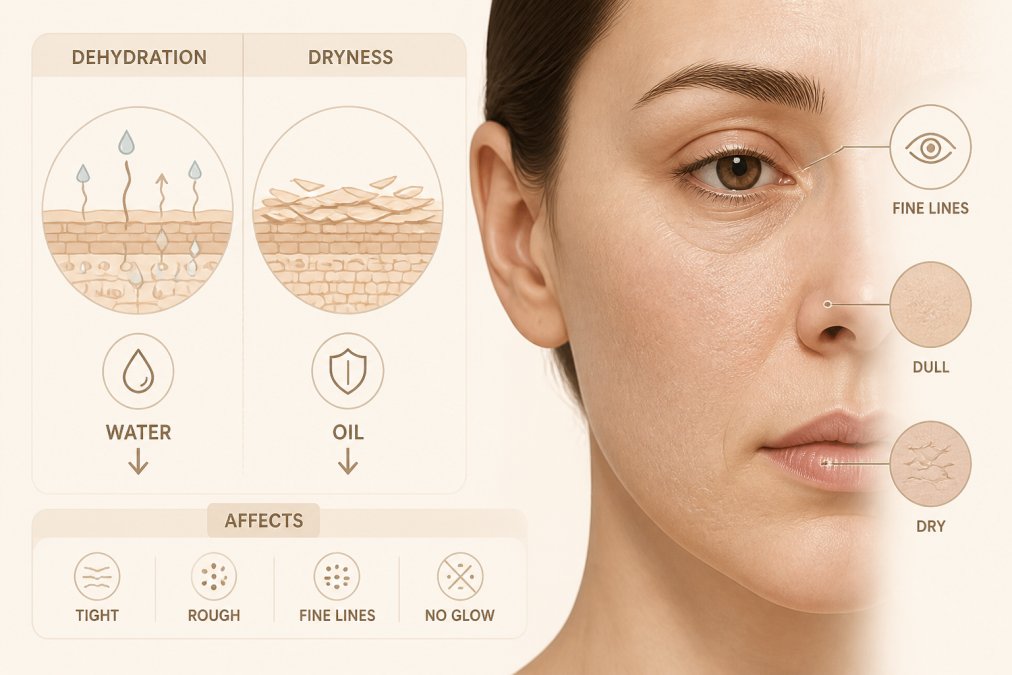
Dehydration and dryness are not the same thing. Dehydration is a lack of water in your skin. Dryness is a lack of oil. You need to know which one you have because the fixes are completely different.
Dehydrated skin feels tight and uncomfortable. It may look dull and show fine lines that disappear when you apply moisturizer. Dehydrated skin can be oily on the surface because your sebaceous glands overproduce oil to compensate for barrier damage underneath.
Dry skin lacks natural oils. It feels rough and uncomfortable, especially after cleansing. Dry skin typically doesn't produce enough sebum, so it feels tight throughout the day and is usually visibly flaky or rough to the touch.
The key difference: if your skin feels uncomfortable and tight but looks oily, you're dehydrated, not dry. If your skin feels uncomfortable and looks rough or flaky, you're dry. Many people have both issues at once, a compromised barrier plus naturally low sebum production. In that case, you need both barrier repair and richer moisturizers.
Exfoliation for Dry Skin: When and How to Do It Right
Exfoliation is essential for removing dead skin cell buildup and restoring radiance. But exfoliating dry skin requires a careful approach. Too much exfoliation damages your barrier and makes dryness worse. Too little exfoliation allows dead cells to accumulate, keeping your skin dull.
For dry or sensitive skin, exfoliate once or twice per week maximum, using a gentle chemical exfoliant rather than a physical scrub. Chemical exfoliants like AHAs and BHAs dissolve the bonds between dead skin cells, allowing them to shed naturally without physical trauma. Glycolic acid and lactic acid are gentle options for dry skin. Start with once weekly and gradually increase frequency only if your skin tolerates it well.
Never exfoliate if your skin barrier is severely compromised. If your skin is stinging, red, or peeling, skip exfoliation entirely until your barrier recovers. Avoid combining multiple exfoliants in the same routine. If you're using a retinoid, which is a gentle exfoliant, you don't need an additional chemical exfoliant.
Building a Skincare Routine for Dull Skin That Actually Works
A skincare routine for dull, dry skin must address three priorities: hydration, barrier repair, and protection.
The importance of hydration, barrier repair, and protection
Start with a gentle cleanser that doesn't strip your skin. Avoid foaming cleansers and sulfates. Use lukewarm water, not hot water. Pat your skin dry gently.
Next, apply a hydrating toner while your skin is still slightly damp. Toners deliver water and humectants like hyaluronic acid directly to your skin. The E'yn Veil No.1 Aloe Hydrating Toner is specifically designed for this step, providing lightweight hydration without heaviness. Apply it to damp skin, allowing water to be drawn into your epidermis.
Then apply a serum that supports barrier repair. Look for ingredients like hyaluronic acid, ceramides, and niacinamide. The E'yn Veil No. 2 Hydrating + Barrier Repair Serum combines these ingredients to rebuild your skin barrier while delivering intense hydration. Apply it to damp skin and allow it to absorb fully.
Finally, seal everything in with a moisturizer containing both hydrating and occlusive ingredients. Hydrating ingredients like glycerin draw water into your skin. Occlusive ingredients like oils and butters prevent that water from escaping. The E'yn Veil No.3 Signature Moisture Seal provides both, creating a protective seal that locks in all the hydration from your previous steps.
This routine, toner, serum, moisturizer, is called layering, and it's the most effective approach for dull, dry skin.
Layering serums and moisturizers for maximum effect
Layering is about using the right products in the right order so each one can do its job. Apply products from thinnest to thickest consistency: hydrating toner, then serum, then moisturizer.
Wait 30 to 60 seconds between each step, allowing each product to absorb. This ensures each product penetrates fully and works synergistically with the next. If you layer products too quickly, they sit on top of each other instead of absorbing.
If you're using active ingredients like retinoids or vitamin C, apply them after cleansing and before your hydrating toner. Actives work best on clean, dry skin. Then follow with your toner, serum, and moisturizer to support your barrier and lock in hydration.
For best results, use The Complete Ritual, which includes the Aloe Hydrating Toner, Hydrating + Barrier Repair Serum, and other essentials designed to work together.

Lifestyle Changes That Restore Skin Radiance
Your skincare routine matters, but lifestyle habits have an equally profound impact on your skin's appearance.
Prioritize sleep. During deep sleep, your body increases blood flow to your skin and rebuilds collagen. Aim for seven to nine hours nightly. Stay hydrated by drinking adequate water throughout the day. Eat a nutrient-dense diet rich in omega-3 fatty acids, antioxidants, and vitamins. Protect your skin from sun damage with broad-spectrum SPF 30 or higher daily. Exercise regularly to increase blood flow and support stress management. Avoid smoking and excessive alcohol, both of which dehydrate your skin and accelerate aging.
Manage stress through meditation, exercise, or time in nature. Chronic stress elevates cortisol, which triggers inflammation, increases sebum production, and accelerates skin aging.
Dull, dry skin doesn't have to be permanent. The causes are identifiable, and the fixes work when you address the root issues: dead skin cell buildup, barrier damage, dehydration, and lifestyle factors. By combining a targeted skincare routine with lifestyle improvements, you'll see visible changes in your skin's radiance, texture, and comfort.
E'yn Skincare's complete ritual, starting with the hydrating toner, moving to the barrier-repair serum, and sealing with a protective moisturizer, addresses all three priorities your skin needs. The Hydrating + Barrier Repair Serum visibly plumps skin and smooths texture from the first use, while the Signature Moisture Seal locks in lasting hydration without any greasy feel. Together, they rebuild your skin barrier and restore the radiance that dull, dry skin has stolen. Start with The Complete Ritual and experience professional-grade results within weeks.
Frequently Asked Questions
How do I know if my dull, dry skin is from dehydration or a damaged barrier?
Dehydrated skin feels tight and lacks radiance but may still produce oil, while a damaged barrier shows visible signs like stinging, redness, and flaking. A compromised barrier struggles to retain moisture, so products absorb poorly. If your skin feels uncomfortable even after moisturizing, or reacts to products it previously tolerated, barrier damage is likely. The E'yn Veil No. 2 serum targets both issues by delivering deep hydration and rebuilding the lipid barrier simultaneously.
Can exfoliation actually help dull, dry skin, or will it make it worse?
Gentle exfoliation removes dead skin cells that trap dullness, but aggressive scrubbing damages an already compromised barrier. For dry skin, use chemical exfoliants like AHAs or BHAs 1-2 times weekly, or skip exfoliation entirely if your barrier is severely damaged. Focus first on hydration and barrier repair, then introduce mild exfoliation once your skin stabilizes. This approach accelerates cellular turnover without worsening dryness.
How long before I see radiance return to dull, dry skin?
Surface hydration improvements appear within 3-7 days of consistent moisturizing, but true barrier repair and restored radiance take 4-6 weeks. Skin cell turnover cycles every 28 days, so meaningful changes in texture and luminosity require patience. The E'yn Veil No. 2 serum delivers visible plumping within the first week, but full barrier restoration and lasting radiance develop over a month of daily use.
What internal factors cause dull, dry skin that topical products can't fix alone?
Dehydration, poor nutrition, hormonal imbalances, stress, and inadequate sleep all dull skin from within. Antioxidant-rich foods, omega-3 fatty acids, and consistent hydration support collagen production and cellular regeneration. While serums and moisturizers repair the barrier externally, internal health directly impacts skin's ability to retain moisture and maintain elasticity. Combine topical hydration with lifestyle adjustments for the fastest, most lasting results.
This article was written using GrandRanker