
How Long to See Skincare Results: A Science-Backed Timeline
Table of Contents
- How Long to See Skincare Results: What the Science Shows
- Understanding Your Skin Cell Turnover Cycle
- When to See Results From a Hydration Serum
- Skincare Purging vs. Breaking Out: Know the Difference
- How to Tell If Your Skincare Is Working
- Factors That Affect How Quickly You'll See Results
- Building Consistency Into Your Skincare Routine
- Conclusion
Last Updated: August 17, 2026
How Long to See Skincare Results: What the Science Shows
Most people expect skincare to work instantly. The reality is messier. How long to see skincare results depends on your skin's natural biology, the specific ingredients you're using, and how consistently you apply them. Understanding this timeline keeps you from abandoning products too early or wasting money on ones that genuinely won't work for your skin.
At E'yn Skincare, we've spent years analyzing what separates customers who see real transformation from those who give up too soon. The difference isn't always the product itself, it's knowing what to expect and when to expect it. Your skin operates on a cycle, and most skincare results align with that cycle, not with arbitrary timelines you find online.
Your skin replaces itself constantly. That process takes time. Understand it, and you'll know exactly what's working and what isn't.
Understanding Your Skin Cell Turnover Cycle
Your skin completely replaces itself roughly every 28 to 40 days. This process, called skin cell turnover, happens as new cells form deep in the epidermis and gradually move upward, eventually shedding as dead skin.
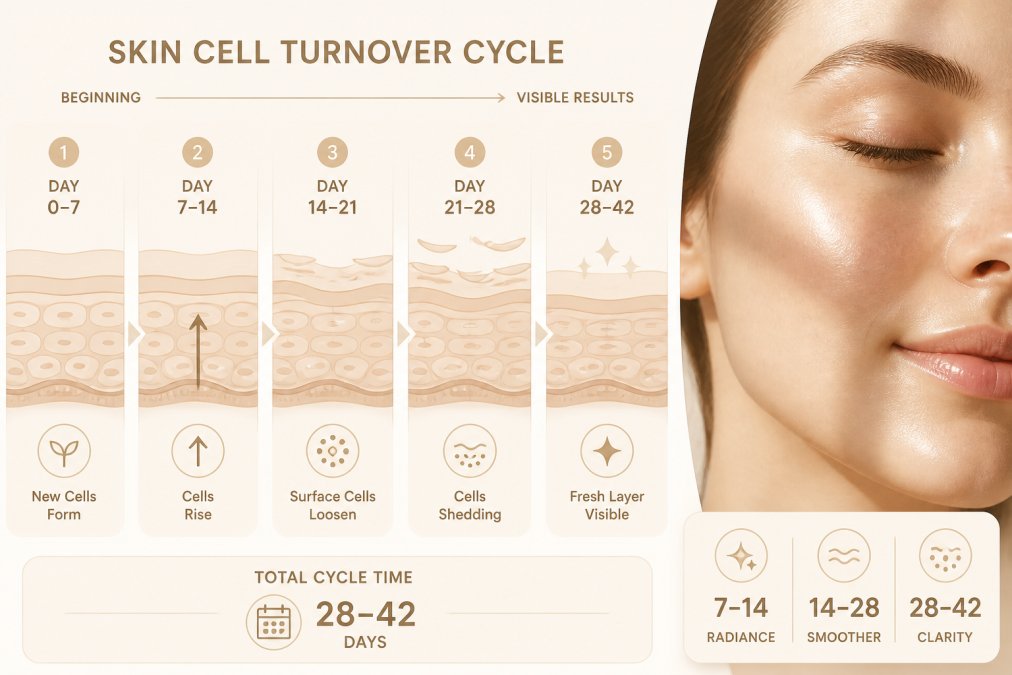
Why does this matter for skincare results? Most visible improvements in skin texture, tone, and clarity depend on this turnover cycle. A hydrating serum can plump your skin within hours, but lasting changes to texture, hyperpigmentation, or smoothness take longer. You're waiting for new, healthier cells to surface and old, damaged cells to shed.
Age plays a major role, younger skin typically turns over faster, while turnover slows in your 30s and beyond. Sun damage, dehydration, and a compromised skin barrier also slow turnover. Consistency of your skincare routine affects turnover too. When you're inconsistent, your skin doesn't establish a rhythm.
The skin cell turnover cycle is your baseline. Products work within this cycle, not against it. When someone tells you they saw results in three days, they saw hydration or temporary plumping. When they tell you their skin texture improved dramatically after eight weeks, that's the cell turnover cycle doing its job with consistent product support.
When to See Results From a Hydration Serum
A hydration serum like the E'yn Veil No. 2 works on two different timelines. The immediate effects happen within hours. The lasting effects take weeks.
Within the first application, a hydrating serum delivers moisture to the skin's upper layers. You'll notice your skin feels softer, looks more plump, and has a subtle glow. This is temporary hydration that lasts until you cleanse, but it's real and encouraging.
The deeper work happens over two to four weeks. A serum formulated for barrier repair gradually strengthens your skin's ability to retain moisture on its own. Your skin barrier becomes more resilient. Redness decreases. Fine lines caused by dehydration appear softer. These changes depend on your skin's cellular processes rebuilding the barrier and replacing damaged cells with healthier ones.
Most people see noticeable, lasting results between four and eight weeks of consistent daily use. This aligns roughly with one to two complete skin cell turnover cycles. Hydration serums are among the faster-acting skincare products because they address hydration, which your skin can improve immediately.
The key variable is consistency. Using a hydration serum three times a week won't deliver the same results as daily use. Your skin needs consistent support to rebuild its barrier and establish a new baseline for moisture retention.
Skincare Purging vs. Breaking Out: Know the Difference
Your skin gets worse before it gets better, and you might assume the product is causing damage. Sometimes it is. Often, it's not.
Purging is a temporary adjustment period where your skin accelerates cell turnover in response to active ingredients. Your pores push out congestion that was already present beneath the surface. You see small breakouts, usually in areas where you typically break out. Purging typically lasts one to three weeks and then improves dramatically.
Breaking out is an allergic reaction or irritation from the product itself. Your skin develops redness, swelling, or breakouts in areas where you don't normally break out. The irritation doesn't improve, it worsens or stays constant.
Purging is temporary and often a sign the product is working. Breaking out is a sign to stop using the product.
Purging typically starts within the first week and peaks around week two. Breaking out can happen immediately or gradually worsen over time. Purging brings existing congestion to the surface in familiar spots. Breaking out appears in new areas or across your entire face as a reaction.
If you have a compromised skin barrier, purging can feel overwhelming. This is why barrier repair products like the E'yn Veil No. 2 are often recommended before introducing active ingredients.
When in doubt, patch test. Apply the product to a small area of your face for three days. If you see purging-type breakouts in that area only, it's likely purging. If you see spreading irritation or swelling, it's breaking out.
How to Tell If Your Skincare Is Working
Real skincare progress shows up in specific ways.
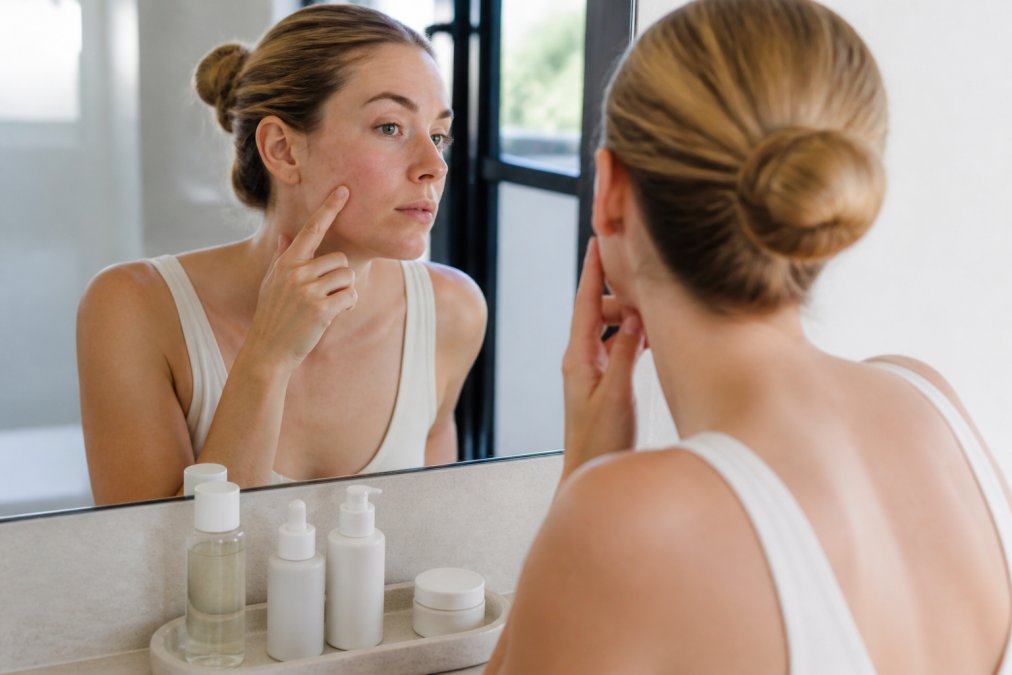
Improved skin texture is the most obvious sign. Your skin feels smoother to the touch. Rough patches soften. Pores appear smaller because they're less congested and your skin is more plump. This usually becomes noticeable within four to six weeks with consistent use.
Skin tone becomes more even. Redness decreases, especially if you're using products formulated to calm sensitivity. Hyperpigmentation fades gradually, typically 8 to 12 weeks, because it requires multiple skin cell turnover cycles.
Hydration is visible in your skin's overall appearance. Your skin looks dewy and radiant rather than dull. Fine lines caused by dehydration appear softer because your skin is plumper. This change happens quickly with hydration serums, often within two to three weeks.
Your skin feels different. It's softer, more supple, less tight. It doesn't feel dry by midday. If you have oily skin, you might notice your skin is less oily because it's not overcompensating for dehydration.
Track your progress visually. Take a photo of your skin in consistent lighting, morning light near a window works well, at the start and every two weeks. Consistent conditions matter because lighting, hydration level, and time of day all affect how your skin looks.
Factors That Affect How Quickly You'll See Results
Not everyone sees results on the same timeline.
Age is a major factor. Younger skin has faster cell turnover, so visible results typically appear faster. A 25-year-old using a hydration serum might see dramatic texture improvement in four weeks. A 45-year-old using the same serum might need six to eight weeks.
Skin type influences results too. Oily skin often responds faster to hydration products because the barrier is already somewhat compromised. Dry skin might take longer because it needs to rebuild barrier function before it can retain moisture effectively. Sensitive skin requires a slower introduction to new products, which extends the timeline.
Your starting point matters significantly. If your skin barrier is severely compromised, it takes longer to see improvement because the barrier needs to heal first. This is why barrier repair is often the first step in a skincare routine.
Consistency is non-negotiable. Using a product five days a week instead of seven means slower results. Your skin needs daily support to establish new patterns.
Lifestyle factors beyond skincare affect your timeline. Sleep quality influences skin cell turnover and barrier function. Dehydration slows results. High stress elevates cortisol, which can trigger breakouts. Sun exposure damages skin and slows improvement.
Dosage and concentration of active ingredients affect speed. A serum with a higher concentration of hyaluronic acid delivers faster results than a lighter formula. The E'yn Veil No. 2 is formulated for efficacy.
Layering and complementary products accelerate results. A hydration serum works better when paired with a toner that preps your skin and a moisturizer that seals in hydration. The Complete Ritual, combining the E'yn Veil No. 1 toner, E'yn Veil No. 2 serum, and E'yn Veil No. 3 moisturizer, delivers better results than using the serum alone.
Building Consistency Into Your Skincare Routine
Consistency determines whether you see results or waste money. The barrier to consistency isn't willpower, it's friction. If your routine is complicated or takes more than five minutes, you'll skip it.
Start with a minimal routine: cleanser, serum, moisturizer. This takes under three minutes. Once this becomes automatic, usually within two weeks, you can add complexity if you want.
Place your products where you'll see them. If your serum is on your bathroom counter next to your toothbrush, it becomes part of your morning and evening ritual. Visual cues matter.
Use the same time every day. Your brain will automate the behavior. After three weeks, you'll do it without thinking. By week four, skipping it feels wrong.
Track consistency, not just results. Mark off days on a calendar when you complete your routine. This helps you spot patterns and builds a visual record of your commitment.
Consistency compounds. One week of daily use shows minor results. Four weeks shows visible results. Eight weeks shows dramatic results. Small, consistent effort creates exponential results over time.
Conclusion
The timeline for skincare results isn't arbitrary. It's rooted in your skin's biology and how quickly your body replaces damaged cells with healthy ones. Most visible improvements take four to eight weeks of consistent daily use, with some concerns requiring 12 weeks or longer. Understanding this prevents frustration and keeps you from abandoning products that actually work.
E'yn Skincare's approach addresses this reality by formulating products that work within your skin's natural cycle. The E'yn Veil No. 2 delivers immediate hydration while supporting long-term barrier repair and cellular regeneration. When paired with the complete ritual, the E'yn Veil No. 1 toner and E'yn Veil No. 3 moisturizer, you create conditions where your skin can progress as quickly as your biology allows. Start today, stay consistent, and you'll see the transformation you're looking for.
Frequently Asked Questions
How long does it actually take to see results from a hydration serum?
Most people notice initial improvements in hydration and skin feel within 1-2 weeks of consistent use. Visible changes in texture, plumpness, and fine lines typically appear between 4-8 weeks. The E'yn Veil No. 2 is formulated to deliver noticeable hydration from the first application, though optimal skin barrier repair and long-term benefits develop with regular use. Patience and consistency are key, your skin cell turnover cycle completes roughly every 28 days, so meaningful results require at least one full cycle.
What's the difference between skincare purging and breaking out?
Purging is a temporary adjustment period where your skin sheds dead cells and brings congestion to the surface, usually lasting 2-4 weeks. Breakouts appear as new blemishes in areas you don't normally experience them and persist beyond 4-6 weeks. Purging typically occurs with active ingredients like exfoliants or retinoids, while a true allergic reaction or sensitivity causes itching, stinging, or redness that worsens over time. If you're uncertain, patch test on a small area first and discontinue if irritation spreads.
How do I know if my skincare is actually working?
Track visible signs: improved skin texture, reduced dullness, softer appearance of fine lines, and visible plumping from hydration. Your skin should feel more comfortable, less tight or irritated. Take photos under consistent lighting every 2-4 weeks to document changes. Beyond appearance, notice how your skin responds to your routine: better moisture retention, reduced sensitivity, and a healthier skin barrier that feels less reactive. The E'yn Veil No. 2 is designed to show visible plumping and smoothing from early use, combined with deeper barrier repair over time.
Why should I wait 4-8 weeks before deciding a product isn't working?
Your skin's natural renewal cycle takes approximately 28 days to complete one full turnover. Meaningful changes in skin health, texture, and barrier function require at least one to two complete cycles of consistent use. Jumping between products too quickly prevents your skin from experiencing the full benefits of active ingredients and prevents you from accurately assessing efficacy. Most dermatologists recommend a minimum of 4-6 weeks of daily use before evaluating whether a product delivers the results you're seeking.
This article was written using GrandRanker