
Why Does My Skin Feel Tight: Causes & Solutions
Table of Contents
- Why Your Skin Feels Tight: The Root Causes
- Dehydrated Skin vs Dry Skin: Understanding the Difference
- Why Does My Face Feel Tight After Washing
- How to Fix a Damaged Skin Barrier
- Immediate Relief: Steps to Soothe Tight Skin Today
- When to See a Dermatologist
- Conclusion
Last Updated: August 5, 2026
Why Your Skin Feels Tight: The Root Causes
Your skin feels tight because it's struggling to retain moisture. This uncomfortable pulling sensation signals that your skin barrier isn't functioning optimally, and water is escaping faster than it can be replaced.
Tightness stems from multiple sources: dehydration (lack of water), dryness (lack of oil), a compromised moisture barrier, harsh cleansing, environmental stress, or low internal hydration. Each requires a different approach.
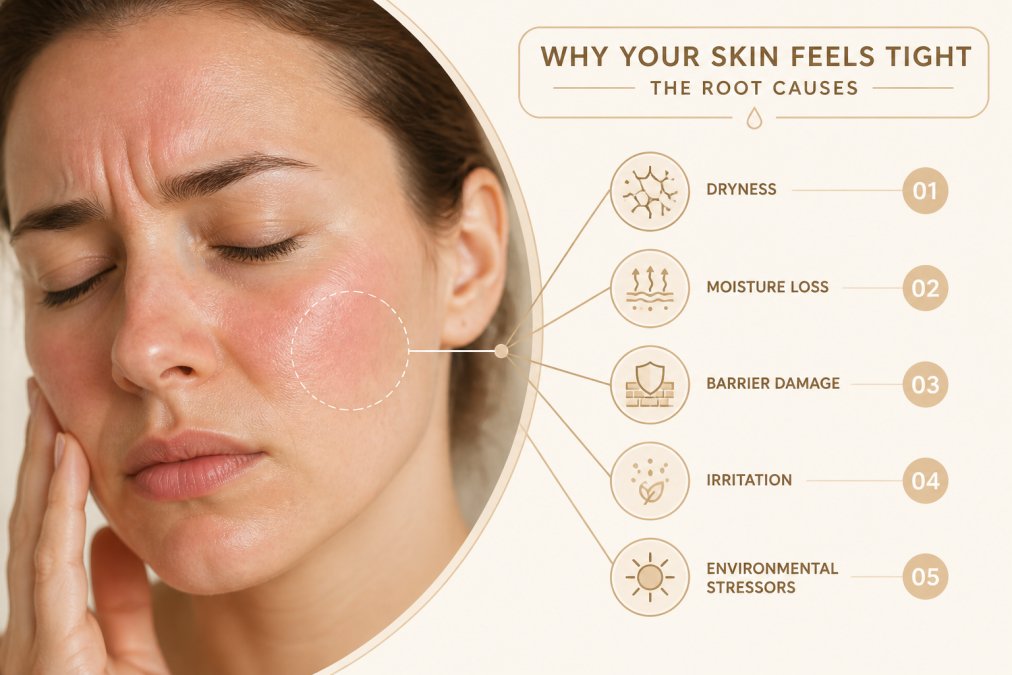
The most common culprit is a damaged skin barrier. Your skin's outer layer contains ceramides, lipids, and protective compounds that form a shield against water loss. When this barrier breaks down, transepidermal water loss accelerates, and water evaporates instead of staying in your skin.
Environmental stressors also play a significant role. Cold, dry air, low indoor humidity, wind, pollution, and sun exposure without protection all compromise your barrier's integrity.
Over-exfoliation is another overlooked cause. Excessive exfoliation strips away healthy skin cells and damages your barrier, leaving skin tight, irritated, and sensitive.
Harsh cleansers and soaps strip natural oils and accelerate barrier damage. Stripping your skin of sebum triggers compensatory oil production and leaves your barrier vulnerable, which is why skin often feels tight immediately after washing.
Dehydrated Skin vs Dry Skin: Understanding the Difference
Dehydrated skin and dry skin are not the same thing, though the terms are often used interchangeably.
Dehydrated skin lacks water. It's a temporary condition caused by insufficient hydration at the cellular level. Your skin might produce adequate oil, but it can't hold onto water. Dehydrated skin feels tight, looks dull, and may appear flaky or congested.
Dry skin is a skin type characterized by insufficient sebum production. Your skin doesn't produce enough natural oils to maintain its protective barrier. Unlike dehydration, which is temporary, dryness is often persistent and related to genetics, age, or hormonal factors.
Here's the practical difference: if your skin feels tight but looks oily or congested, you likely have dehydrated skin. If your skin feels tight, looks dull, and has a consistently rough texture, you might have dry skin type, which needs occlusive products to seal in hydration.
Many people have combination skin: dehydrated in some areas and dry in others. Your T-zone might produce adequate sebum while your cheeks feel perpetually tight.
Why Does My Face Feel Tight After Washing
Your face feels tight after washing because your cleanser is disrupting your skin barrier and stripping away the natural oils that protect it. Many cleansers contain surfactants designed to dissolve oil aggressively, but they don't discriminate between excess sebum and the essential lipids your barrier needs.
The severity depends on your cleanser. Harsh soaps and sulfate-based cleansers cause more tightness than gentle, pH-balanced cleansers. If your skin feels noticeably tight within five minutes of washing, your cleanser is likely the problem.
The pH of your cleanser matters too. Your skin's natural pH is slightly acidic (around 4.7 to 5.75), which helps maintain barrier function. Alkaline cleansers disrupt this pH balance and temporarily compromise your barrier.
The solution is to switch to a gentle, pH-balanced cleanser and follow immediately with a hydrating toner or serum to restore water content before applying your moisturizer. Applying products to damp skin helps humectants like hyaluronic acid draw water into your skin more effectively.
At E'yn Skincare, the E'yn Veil No.1 Aloe Hydrating Toner is designed specifically to address this, restoring hydration immediately after cleansing without adding heaviness.
How to Fix a Damaged Skin Barrier
A damaged moisture barrier is the underlying cause of most persistent tightness. Repairing it requires stopping what's damaging it, then actively rebuilding it with the right ingredients.
Stop the damage first. Eliminate over-exfoliation (limit chemical exfoliants to 2-3 times per week maximum, skip physical scrubs if your barrier is compromised). Switch to a gentle cleanser without sulfates or harsh surfactants. Avoid products with high concentrations of acids or retinoids until your barrier recovers. Use lukewarm water when cleansing; hot water increases water loss.
Rebuild with the right ingredients. Your barrier needs water, lipids, and ceramides. Humectants like hyaluronic acid draw water into your skin. Occlusives like plant oils and waxes seal that water in. Ceramides rebuild the barrier's architecture.
Look for products containing ceramides, hyaluronic acid, glycerin, and plant-derived lipids. These work synergistically: hyaluronic acid brings water in, ceramides and lipids lock it there, and your barrier gradually restores itself.
The E'yn Veil No. 2 Hydrating + Barrier Repair Serum combines hyaluronic acid with a barrier-supporting complex designed to visibly plump skin and calm sensitivity. Paired with a gentle cleanser and good moisturizer, it creates conditions for barrier repair.
Timing matters in your routine. Apply hydrating products to damp skin, then follow with an occlusive moisturizer while your skin is still slightly moist. The E'yn Veil No.3 Signature Moisture Seal seals in everything that came before it without feeling heavy or greasy.
Be patient. Expect noticeable improvement in tightness within 1-2 weeks, and significant barrier restoration within 4-6 weeks of consistent use.
Immediate Relief: Steps to Soothe Tight Skin Today
If your skin feels uncomfortably tight right now, these steps deliver relief within hours.
Step 1: Hydrate immediately with a hydrating toner or essence. Apply this to damp skin (spray your face with water first if needed). The E'yn Veil No.1 Aloe Hydrating Toner is lightweight and fast-absorbing.
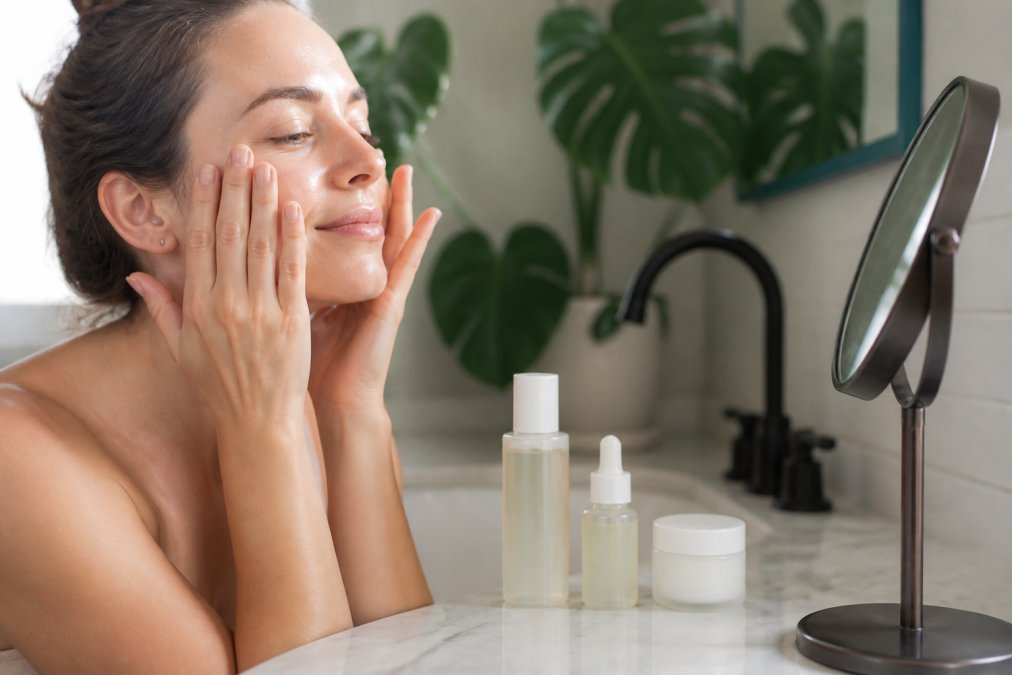
Step 2: Layer a barrier-repair serum. Once your toner has absorbed (wait 1-2 minutes), apply a serum designed to support your moisture barrier. Look for hyaluronic acid, ceramides, and plant oils. Apply to damp skin for maximum absorption.
Step 3: Lock everything in with a moisturizer. Apply while your skin is still slightly damp. If your skin is very tight or reactive, choose a moisturizer with higher oil content; if your skin is oily, a lightweight gel-cream works better.
Step 4: Avoid further irritation for the rest of the day. Skip exfoliants, strong actives, and anything with fragrance or essential oils. Keep your routine simple: cleanser, toner, serum, moisturizer.
Step 5: Drink water and eat foods rich in omega-3 fatty acids. Your skin's hydration starts from within. Fatty fish, flaxseeds, walnuts, and chia seeds support skin health from the inside.
Most people notice their skin feels noticeably less tight within 24 hours. Stick with this routine for at least a week before evaluating improvement.
The Complete Ritual bundle pairs the Aloe Hydrating Toner, Hydrating + Barrier Repair Serum, and Signature Moisture Seal, all three steps optimized to work together for barrier repair and lasting hydration.
When to See a Dermatologist
Most cases of tight skin resolve with proper skincare within 2-4 weeks. See a dermatologist if your skin feels tight and you also experience persistent redness, burning, stinging, or itching that doesn't improve with gentle skincare. These symptoms suggest conditions like rosacea, eczema, or contact dermatitis.
If your skin feels tight, looks scaly or flaky, and doesn't improve after 4 weeks of consistent barrier-repair skincare, have it evaluated. You might have xerosis or another condition requiring prescription treatment.
Seek professional help if tightness is accompanied by hives, severe swelling, or signs of an allergic reaction.
If you've recently changed skincare products and developed sudden tightness, redness, or irritation, see a dermatologist to rule out contact dermatitis or allergic reaction.
Consider a dermatology consultation if tightness is localized to specific areas and doesn't respond to general barrier-repair strategies.
For most people, tight skin is a barrier function issue that resolves with the right skincare approach. Start with gentle cleansing, hydrating products, and barrier-repair ingredients. Give it 2-4 weeks. If you're not seeing improvement, that's when professional evaluation makes sense.
Tight skin is uncomfortable but fixable. Most cases stem from a compromised moisture barrier, a problem that responds well to the right approach. Identify the cause, then address it directly. Switch to gentle cleansing, layer hydrating and barrier-repair products, and be consistent. Within a few weeks, you should feel a noticeable difference.
If you're dealing with tight, dehydrated skin, E'yn Skincare's approach focuses on deep hydration and barrier repair without heaviness. The E'yn Veil No. 2 Hydrating + Barrier Repair Serum is designed to visibly plump skin and restore your moisture barrier's integrity. Pair it with the Aloe Hydrating Toner and Signature Moisture Seal for a complete ritual that addresses tightness at every level. Get started with E'yn Skincare and experience the difference that professional-grade hydration and barrier repair can deliver.
Frequently Asked Questions
Is tight skin always a sign of dehydration?
Not necessarily. Tight skin can result from dehydration, a damaged moisture barrier, harsh cleansing, over-exfoliation, or environmental stressors. The tightness sensation occurs when your skin lacks adequate hydration or when the barrier is compromised, preventing water retention. If tightness persists after hydrating, consider whether you're using overly harsh products or over-exfoliating. A dermatologist can help identify the specific cause.
Why does my skin feel tight even after moisturizing?
Moisturizer alone may not solve the problem if your skin barrier is damaged or if you're using products that strip moisture. Tight skin often requires a multi-step approach: cleanse gently, apply hydrating toners or serums with humectants like hyaluronic acid, then seal with a moisturizer. The E'yn Veil No. 2 Hydrating + Barrier Repair Serum works beneath the surface to rebuild barrier function, while the E'yn Veil No. 3 Signature Moisture Seal locks in hydration. Results typically appear within one to two weeks of consistent use.
Can tight skin be caused by using too many skincare products?
Yes. Over-exfoliation, layering incompatible products, or using too many actives simultaneously can damage your skin barrier and cause tightness. Simplify your routine to a gentle cleanser, hydrating toner, serum, and moisturizer. The Complete Ritual from E'yn Skincare is designed as a streamlined three-step system that addresses hydration and barrier repair without overwhelming your skin. Allow each product to absorb fully before applying the next.
How long does it take to fix tight, uncomfortable skin?
Most people notice improvement within 3-7 days of using hydrating, barrier-repairing products consistently. Visible plumping and softening of tightness typically appear within 1-2 weeks. Complete barrier restoration may take 4-6 weeks, depending on the severity of damage. Consistency matters: use your routine twice daily, avoid harsh cleansers, and protect your skin from environmental stressors. If tightness doesn't improve after two weeks, consult a dermatologist.
This article was written using GrandRanker